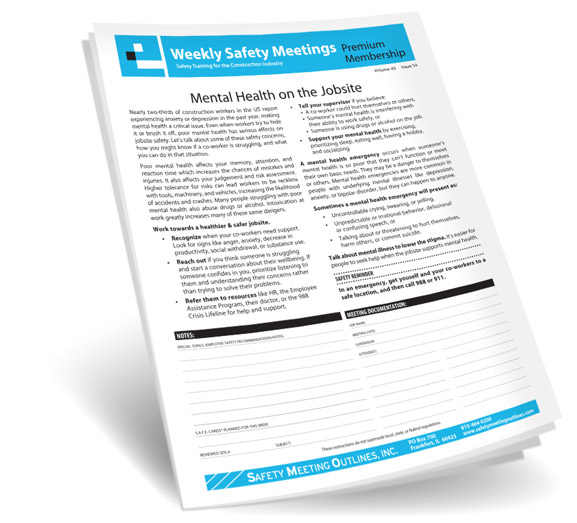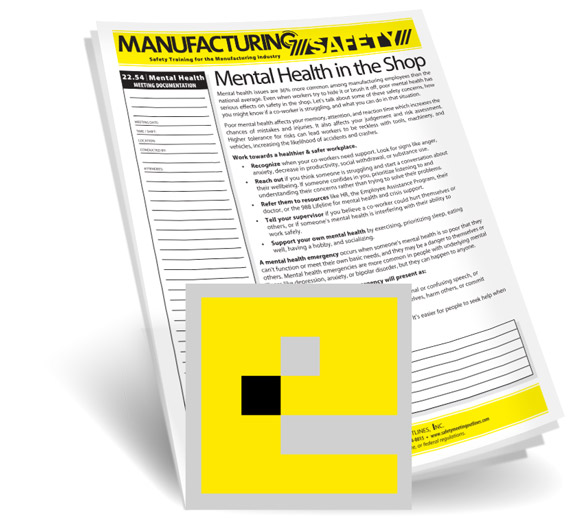

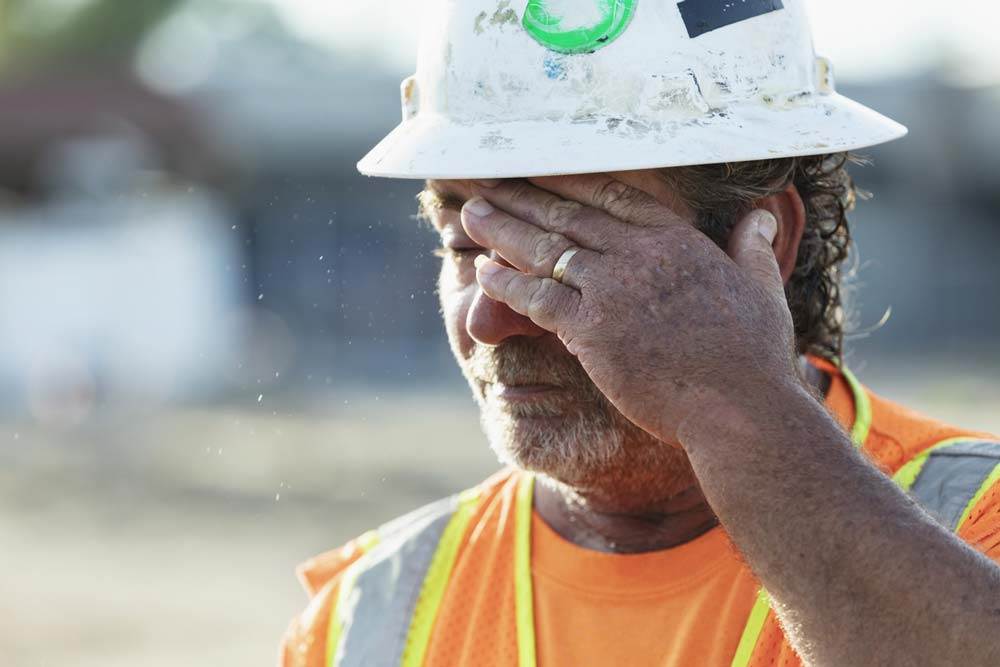
Construction and manufacturing industries are hazardous work environments on several levels. Work-related stress is a factor in the high numbers of mental disorders and deaths by suicide among workers in construction—the industry with the second-highest suicide rate among all U.S. industries. Additionally, employees in manufacturing work in high-stress, demanding environments that can negatively affect mental health. Physical demands, repetitive tasks, heavy lifting, shift work, social isolation, intense noise, and production schedules take a toll on the bodies and minds of workers.
Addressing mental health issues and prioritizing mental well-being helps maximize production and improves morale and employee retention. Poor mental health can lead to mistakes and accidents. But employees who feel supported are more likely to make good—safe—decisions that save time, lives, and money.
Discussing mental health in the workplace is critical because employee well-being directly impacts productivity and staff retention. When workers feel supported, they're less likely to get burned out and more likely to communicate well and perform better. Poor mental health can lead to mistakes and accidents.
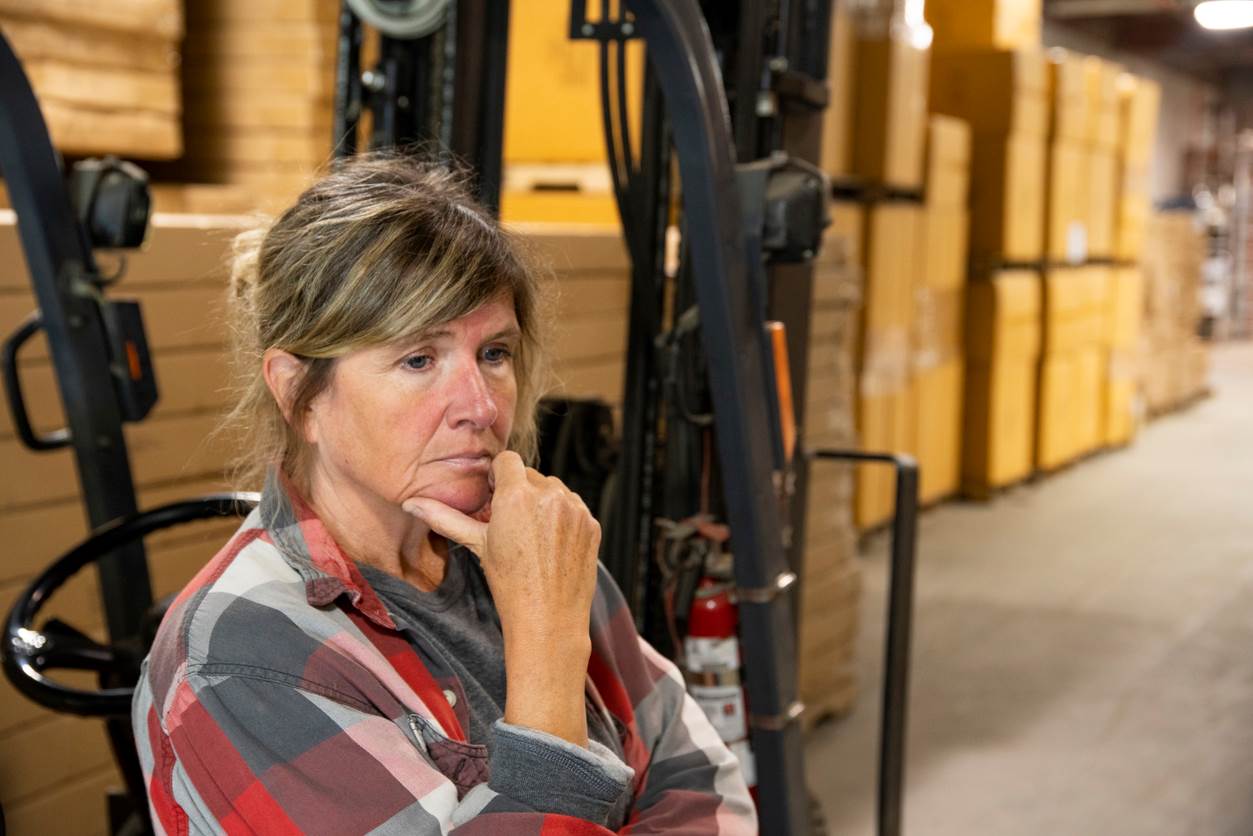
Reducing the stigma around mental health starts with you. Make your jobsite or shop a place where talking about mental health is accepted. Encourage open communication around situations that make workers stressed, overwhelmed, anxious, or angry, so your crew feels comfortable asking for help before things get bad. Here are steps you can take:

You don't have to be an expert on mental health to make a real difference in the lives of your workers. Encourage them to ask for help when they need it and when you can direct them towards resources—like these. By training your team on mental health, you could be saving lives.
Every May is Mental Health Awareness Month in the US. Every September is National Suicide Prevention Awareness Month and also National Recovery Month for substance use and mental health. Capitalize on these opportunities to address employee mental well-being.
We've compiled a list of Community and Mental Health Resources for you to help you help your employees. If you or someone you know needs support, call or text the 988 Suicide and Crisis Lifeline.
Companies across the country and across industries are increasingly addressing mental health issues and prioritizing mental well-being to improve safety, maximize production, and retain employees.
We have published toolbox talks on mental health-related issues over the last several years as part of Standard Subscription and Premium Membership products. The Suicide Prevention meeting, published in September 2026, is the most recent mental health meeting. A new category of mental health-related toolbox talks is now available in the Online Library.
Premium Members can find the newly released mental health category in the Online Library.
Standard Subscribers can upgrade to a Premium Membership by contacting the office.
Learn more about the features and benefits of the Online Library.